Credit
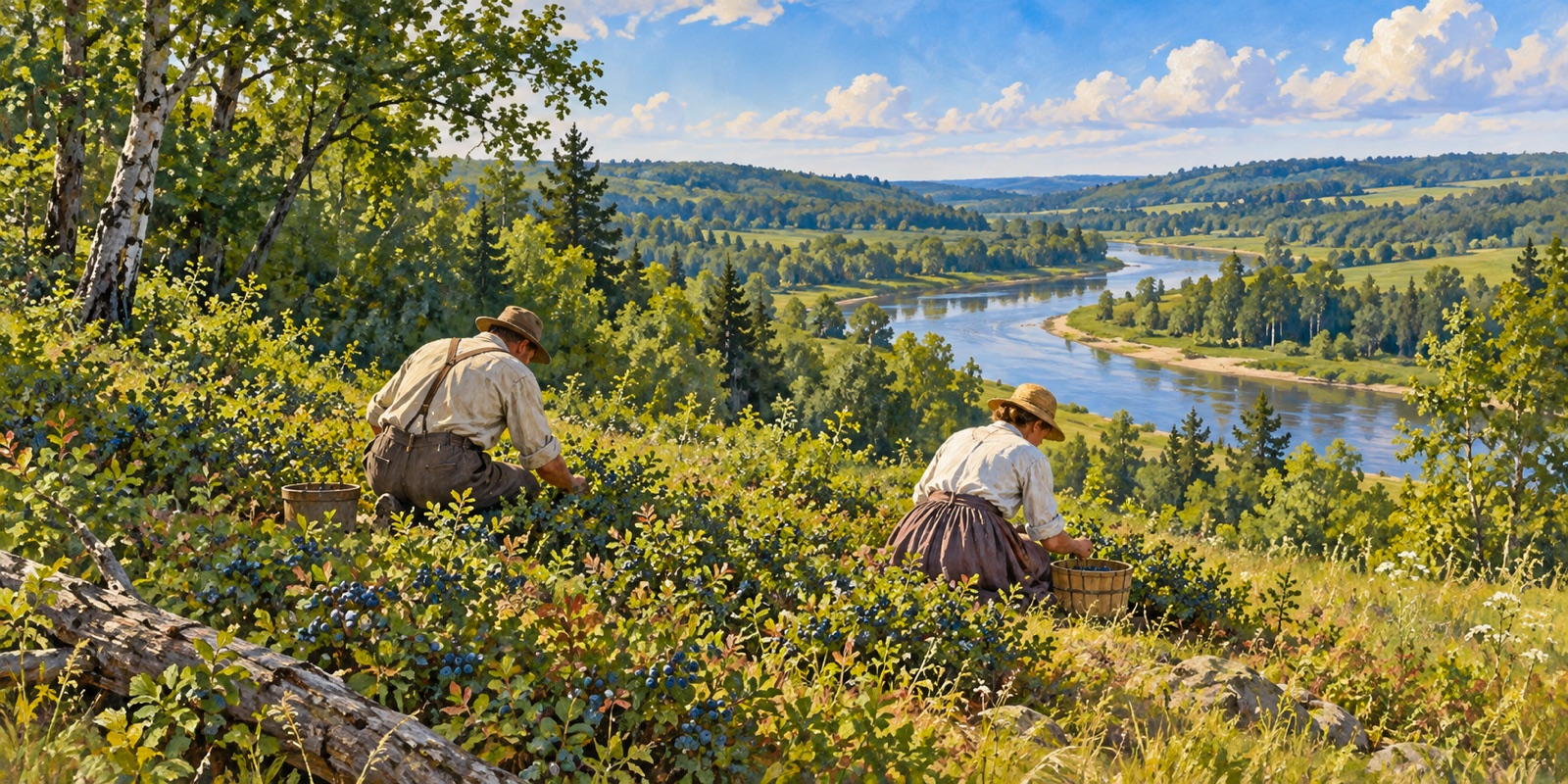
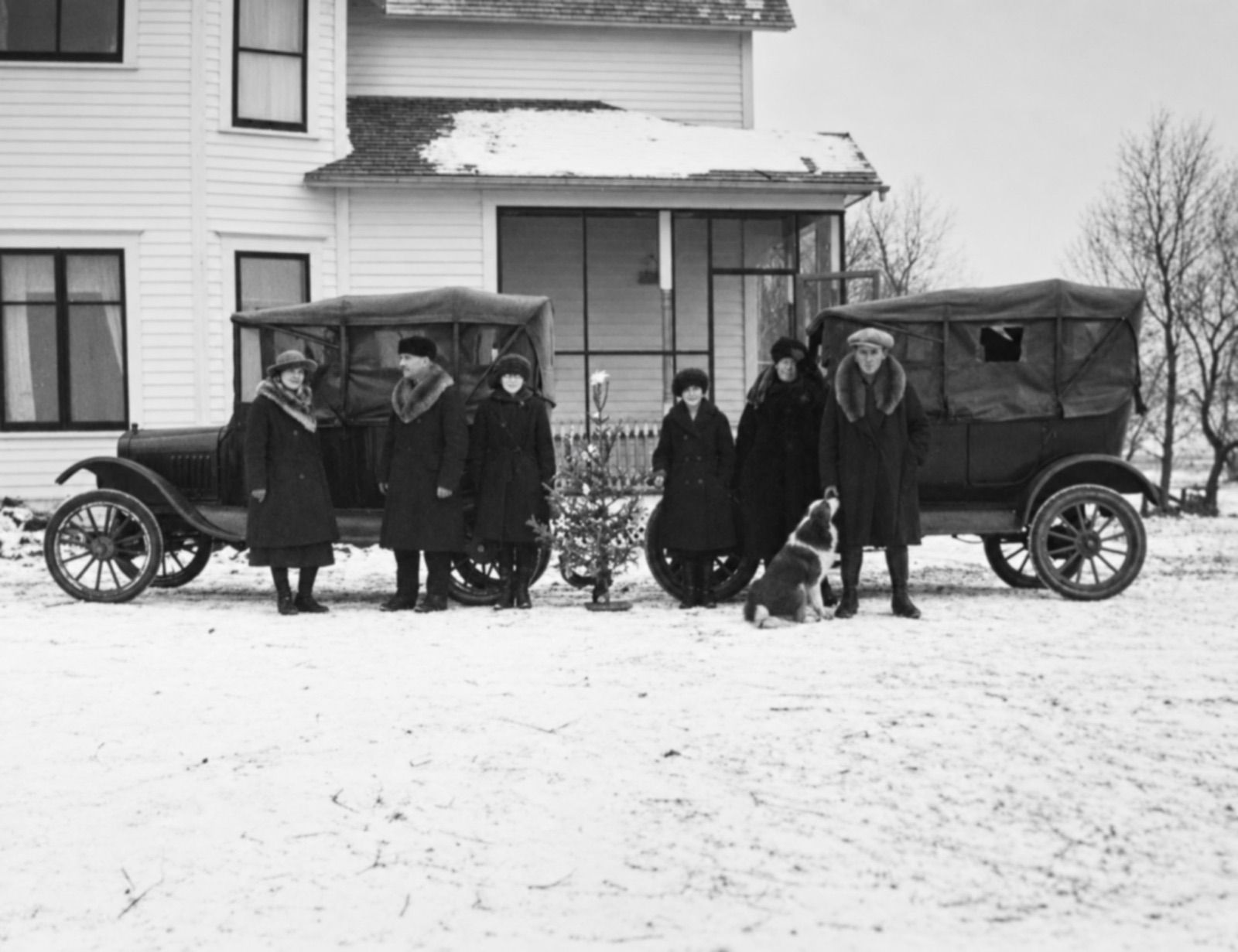
Made with AI in 2026. It pictures an item in the Moscow Township news of July 14, 1921.Reading the Moscow Township news in the Cavalier County Farmers Press now feels a little like following the neighborhood on social media. Carl and his brother Tom’s trip to town was Saturday-evening news. So was dinner at Fred Lundgren’s with several other families. “A sumptuous dinner was served at six o’clock,” the correspondentcorrespondent (plural correspondents) A local resident who sent the week’s news from one rural community to the county paper: visitors, illnesses, trips to town. Usually unpaid beyond a free subscription, and most often a woman. All the words reported. September 30, 1920, p. 6.
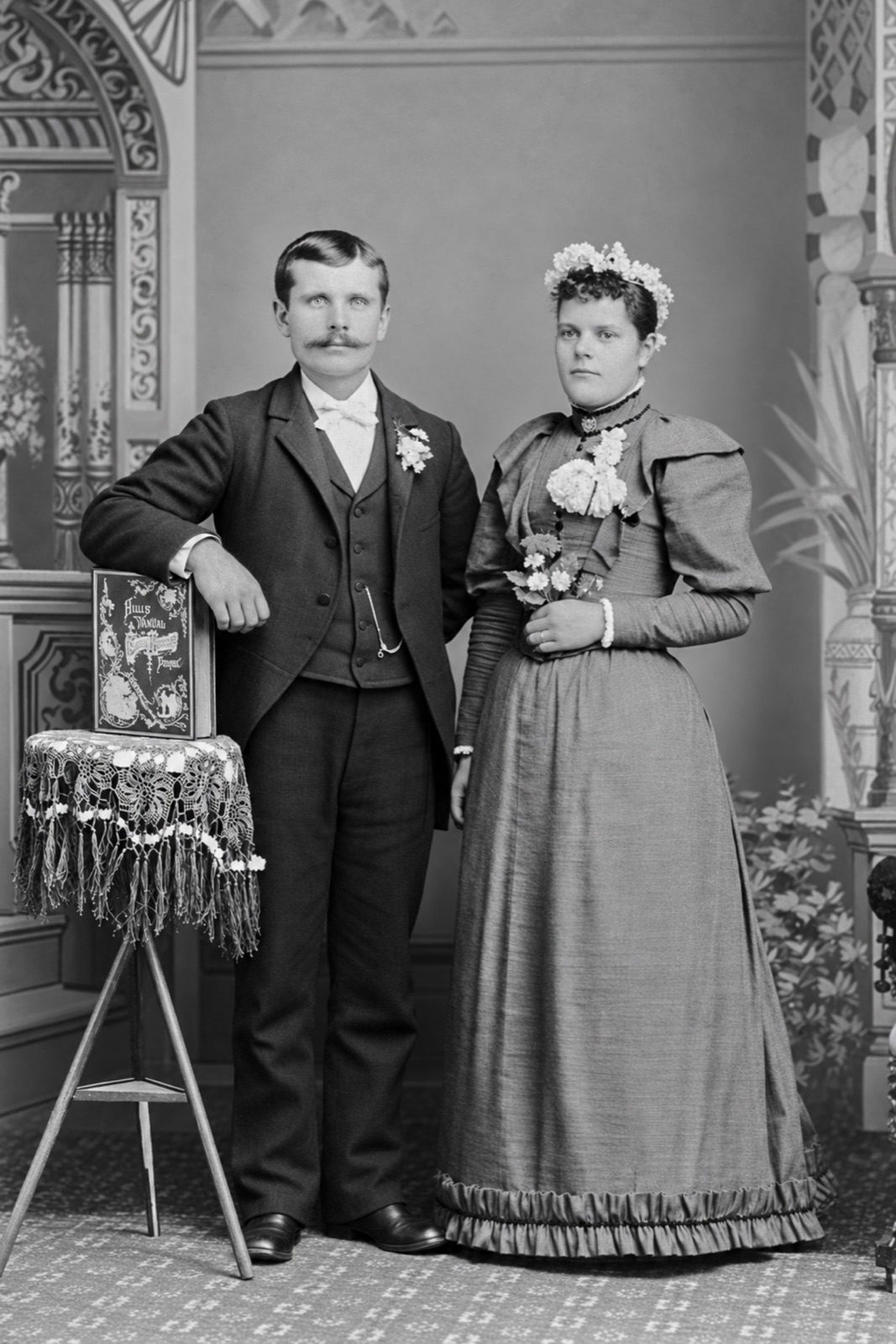

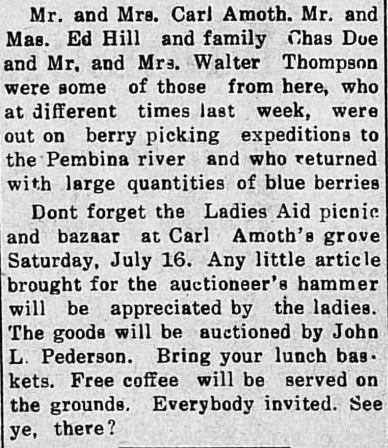
My favorite is an invitation from the summer of 1921:
“Bring your lunch baskets. Free coffee will be served on the grounds.”
On Saturday, July 16, 1921, the Moscow church’s Ladies AidLadies Aid A congregation’s women’s society (in Norwegian Lutheran churches, the kvindeforening). Its sales, suppers and bazaars raised money for the church, its building and its missions. All the words Society planned to hold its annual picnic and bazaar at Carl and Mina Amoth’s farm. Mina had been the society’s first president when it organized in 1906, and led it for seven years. Friends from Langdon and the surrounding countryside were invited. John L. Pederson would auction the little articles people brought along. The newspaper placed the gathering in “Carl Amoth’s grove” and ended its invitation with “See ye, there?” July 7, 1921, p. 1; July 14, p. 8.
The whole column reads a lot like the News from Lake Wobegon on Garrison Keillor’s A Prairie Home Companion, except these people were real and I’m related to them.
A home that could welcome the neighborhood had been a long time coming. Carl wrote home all through his and Tom’s year away, and someone later typed up a summary of his letters, quoting him here and there—probably at a Devils Lake law office, whose letterhead is on the last page. It describes three failed crops in Minnesota before Carl and Tom took horses and farm equipment to Alberta in 1895. Mina—Minnie in the letters—and their little son Guy stayed behind in Minnesota. By July 1896, Carl was returning from Alberta and wanted them to join him as soon as he could get a house. He’d heard Guy was sick again. “When I see him and dance with him he will be better,” he wrote. The Long Way to Langdon; the July 1896 letter.
Mina reached Cavalier County on October 14, 1896. Years later, a county pioneers’ association form asked her why she had come. Her answer: “We came to Cavalier County to have a home of our own.”
In 1913, a farming report put numbers to Carl’s work. Three acres of Marquis wheat yielded 23 bushels an acre; his Red Fife yielded 17. He cut the Marquis ten days earlier. Marquis was the new wheat then, released in Canada in 1909. It ripened earlier than Red Fife, which could freeze in the field in a year with an early frost. Up there, ten days mattered. Courier-Democrat, November 6, 1913, p. 4; Marquis wheat.
By 1920, the Moscow correspondence column was regularly reporting company at the Amoth home. The choir practiced there one Saturday evening. In December, their daughters Marie and Clarice—Clarice turned nine that month—hosted the junior sewing club, which conducted its business and elected officers. Marie became secretary; Clarice joined the purchasing committee. August 5, 1920, p. 8; December 16, p. 8.
There were outings, too. In early summer 1921, Carl and Mina spent a few days camping at the Walhalla chautauquachautauqua (plural chautauquas) A summer gathering of lectures, sermons and entertainment, with families often camping on the grounds. The name comes from the first one, on Chautauqua Lake, New York, in 1874. Walhalla’s ran for several weeks each summer at Mager Grove, in a bend of the Pembina River. The Walhalla Chautauqua, on St. Vincent Memories → with neighbors. The following week’s paper included them among those who’d gone berry picking along the Pembina River and brought back large quantities of blueberries. Haying was now demanding attention, the same column noted. July 7, 1921, p. 8; July 14, p. 8.
That berry-picking notice stopped me, because I’d just done the same thing. During the August 2026 harvest in Idaho’s Kootenai Valley, my cousins and I took a Sunday off to pick huckleberries on Queen Mountain—three generations of Amoths together. A century earlier, my great-grandparents had made time for berries in a busy farm summer.
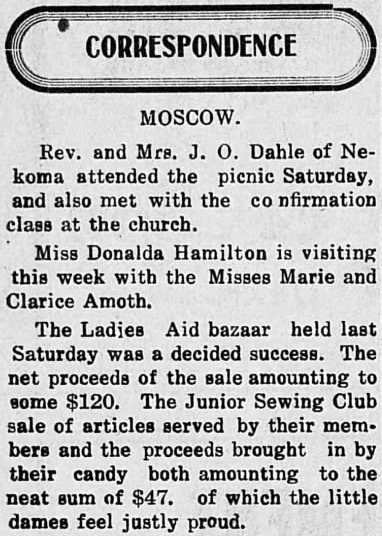
The picnic earned its own follow-up. The July 21 paper called the Ladies Aid bazaar “a decided success,” with about $120 in net sale proceeds. Marie and Clarice’s junior sewing club brought in $47 with its articles and candy. Its members, described as “the little dames,” were said to be justly proud. July 21, 1921, p. 8; December 16, 1920.
Credit
Cavalier County Farmers Press, Langdon, North Dakota, July 14, 1921, p. 8. Digital image: Newspapers.com, where it’s filed as Courier Democrat. Cavalier County Farmers Press, Langdon, North Dakota, July 21, 1921, p. 8. Digital image: Newspapers.com, where it’s filed as Courier Democrat. See the July 14 clipping on Newspapers.com See the July 21 clipping on Newspapers.comMy dad, Pete Amoth, wrote in As I Remember It that Carl was “apparently a great leader of people,” sometimes called “King Carl.” He also described Mina as a strong leader among the community’s pioneer women. Pete’s memoir.
Carl’s public duties also took him away from the farm. As township assessor, he valued property for taxation; his death notice recalled township and school-board service as well. May 13, 1920, p. 8; what an assessor did.
On May 6, 1924, he went to Langdon for a meeting of Moscow township road men. According to the Grand Forks Herald, he became ill while eating with other farmers at Mansons Bros. restaurant. A doctor was called, and he was taken to his brother-in-law Ludvig Pederson’s home. The paper reported a paralytic stroke; Carl lost consciousness and never regained it. He died at six the next morning, aged 55. Guy supplied the particulars for his father’s death certificate. The little boy Carl had once promised to dance with was now recording his father’s death. Obituary, May 8, 1924; Herald, May 10, 1924, p. 9; death certificate.
Nearly a thousand people came to his funeral. The pallbearers named in his obituary were old friends and neighbors, Fred Lundgren among them. The funeral.
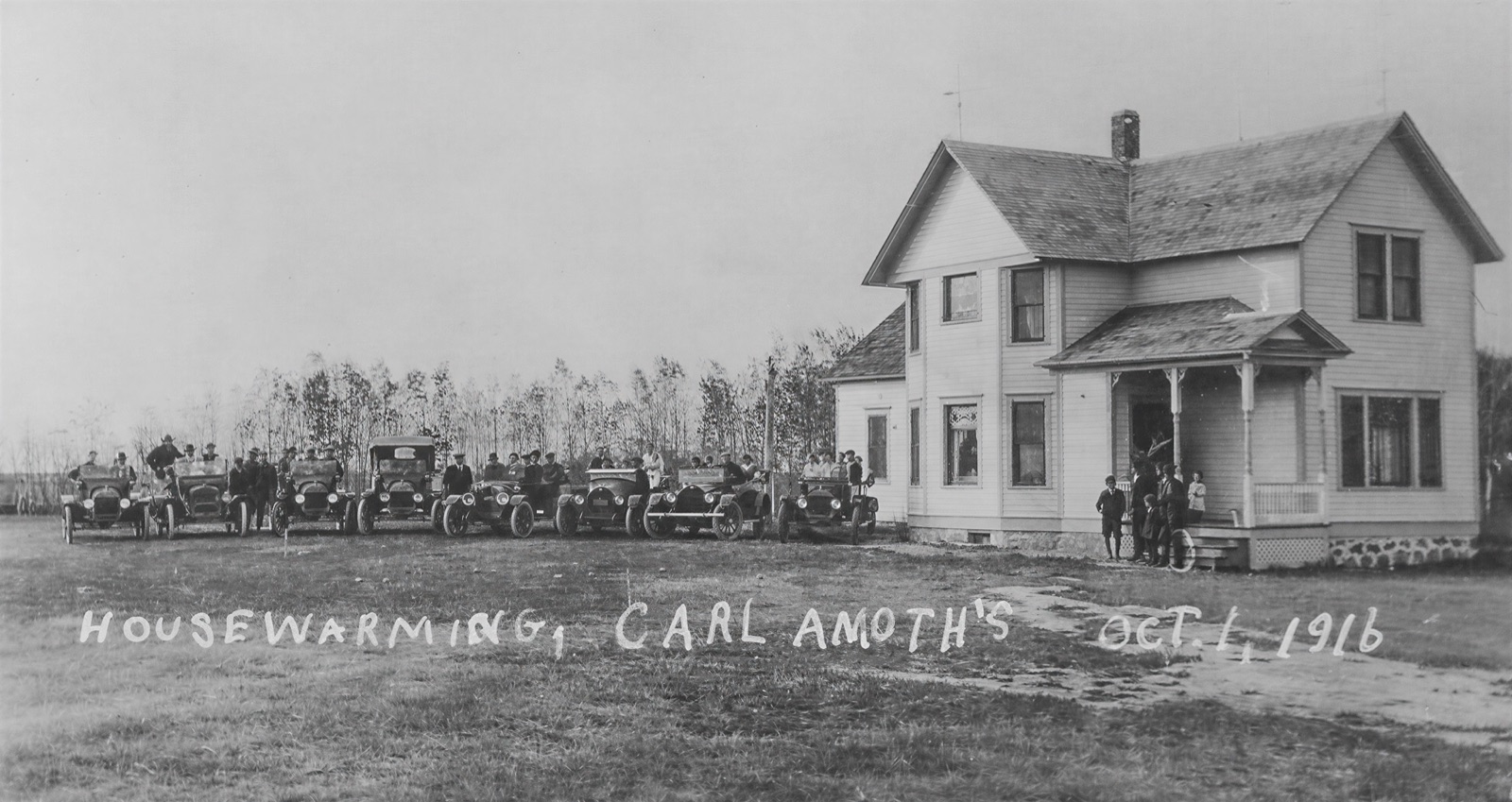
There’s another image to leave with: the family’s photograph labeled “Housewarming, Carl Amoth’s, Oct. 1, 1916.” Motorcars stand in a long row beside the farmhouse, with guests gathered around them and on the porch. We haven’t identified the faces yet. To me, the gathering celebrates Carl and Mina and the home they’d made together.
How we know
The Moscow Township news is from the Langdon weekly that printed itself as the Cavalier County Farmers Press in 1920 and 1921; Newspapers.com files those pages under Courier Democrat. The 1913 wheat report is in the Courier-Democrat. Each newspaper date above opens a public clipping; from there, readers can choose View clipping page to see its place in the full issue. When I opened one without signing in, in October 2026, Newspapers.com counted it as one of five free articles; that limit is theirs and may change. Mina’s words, her arrival and her years leading the Ladies Aid come from the scrapbook kept by Judy Amoth and her mother, Clara: a typed copy of her Cavalier County Pioneers’ Association form, and her 1958 obituary. Carl’s funeral is from the same scrapbook: a clipping whose paper and date aren’t marked, and a typed copy of his obituary from the Cavalier County Republican of May 8, 1924, which names the pallbearers. Both are given in full. Neither paper turned up on Newspapers.com. The 1895–96 letters are known from four typed pages summarizing them, found in Pete’s files, and The Long Way to Langdon gives them as typed. Carl’s death certificate is on his page, from Ancestry’s copy of the state record.