Who’s who
- Knud Ingemundsen, born in Veggli in 1862. In America he went by Knute Stenerson, taking his surname from his grandfather, Stener Ingemundsen. Clara Kjemhus’s grandfather and Pete Amoth’s great-grandfather.
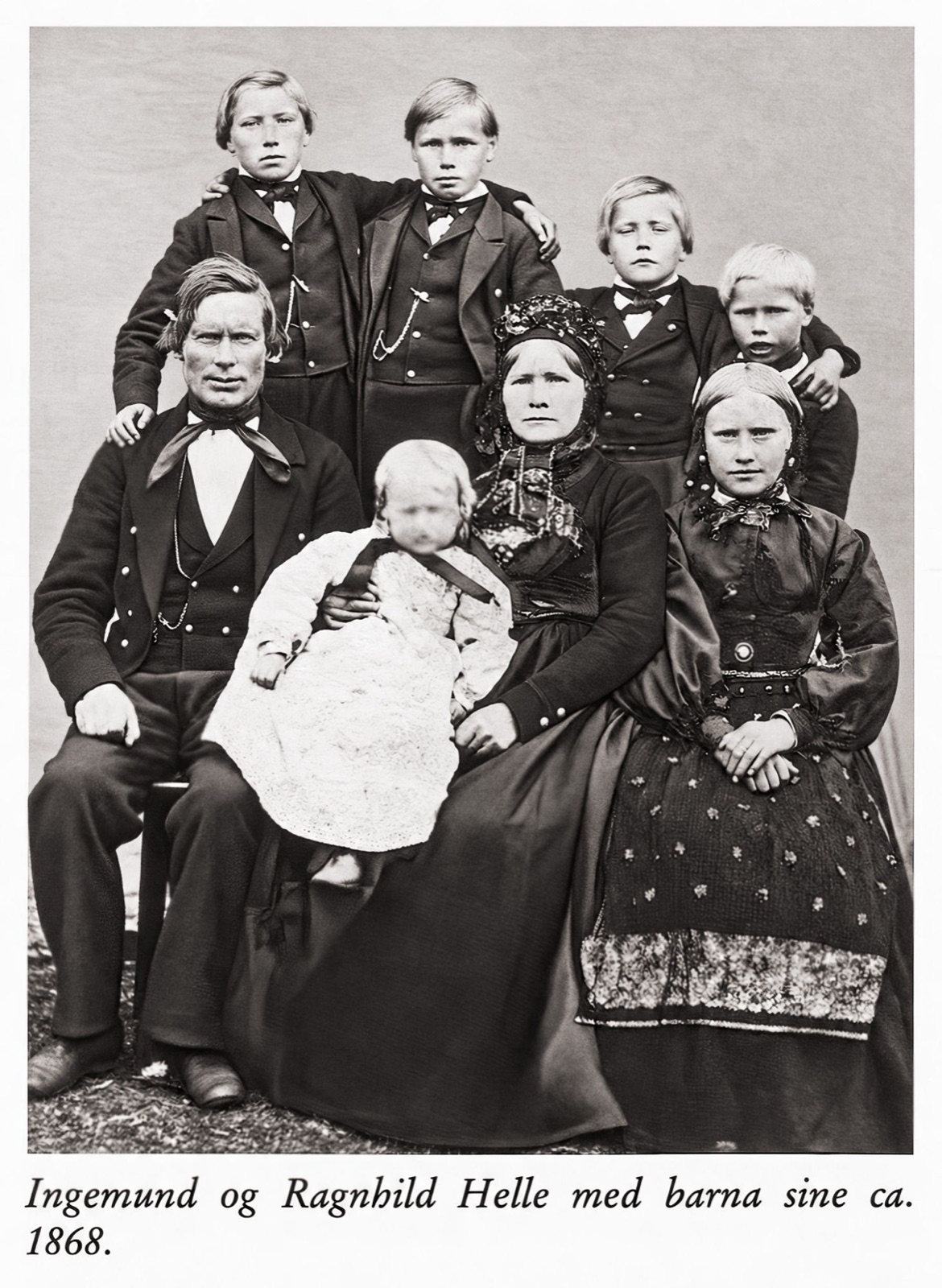
- Ingemund Stenersen and Ragnild Svensdatter, his parents, who farmed Helle in Veggli.
- Ragnild Tostensdatter of Mogstue in Veggli. A different Ragnild: Bergit’s mother.
- Bergit, their daughter, born in 1887. Later Bergit Kjemhus, Clara’s mother.
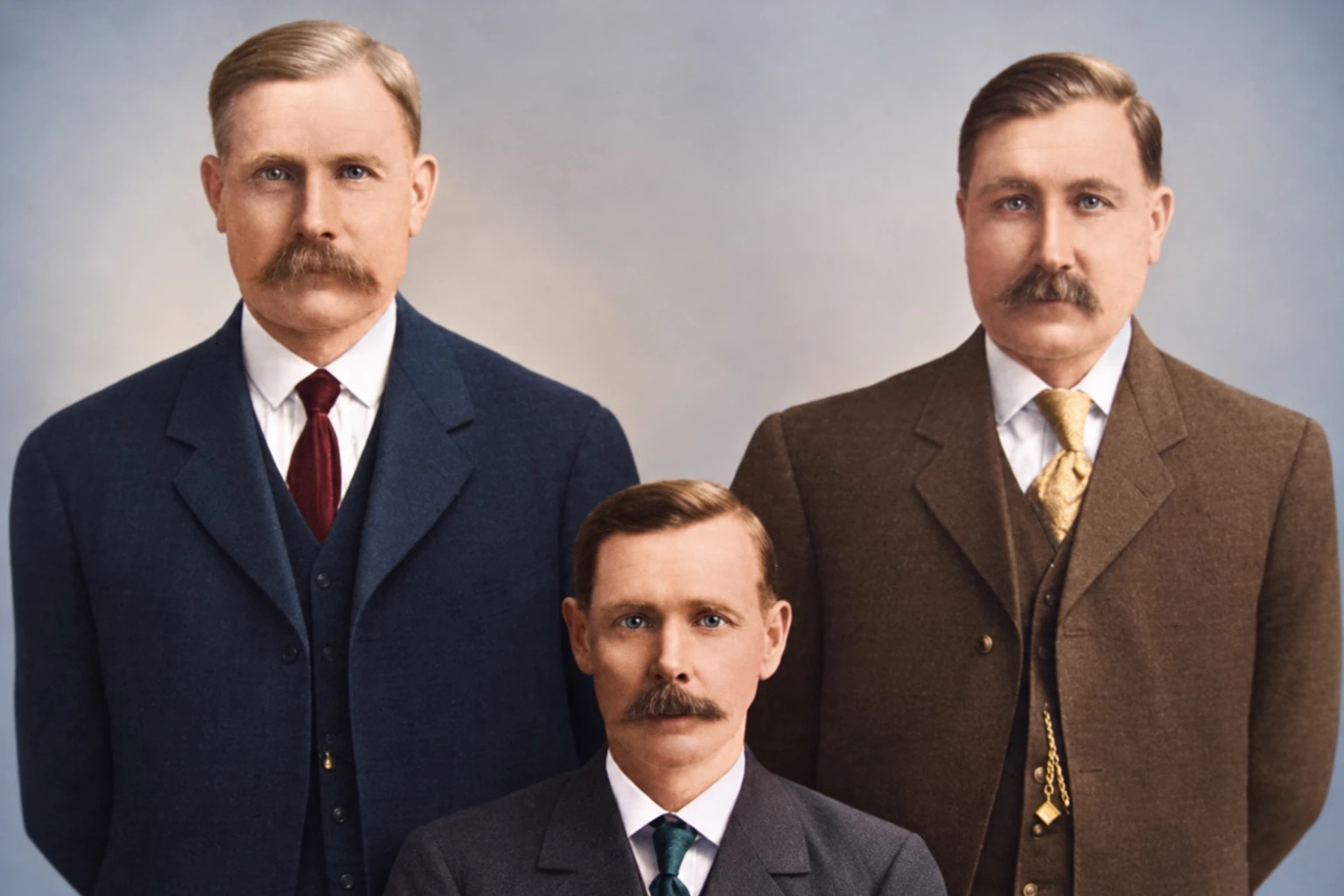
- Sven and Gunder, Knute’s brothers and partners in the lumber business.
- Lina J. Sten, whom Knute married in 1893.
- Karen Amalia, Knute and Lina’s adopted daughter, born in 1891. Later Karen Clauson.
- Ole Gjermundsen, whom Ragnild married in 1894.
- Tollef Kjemhus, whom Bergit married in 1906.
Veggli
Knud Ingemundsen was born on February 19, 1862, on the farm Lillehøiset in Veggli, in the NumedalNumedal A long valley in southern Norway, running north-west from Kongsberg, where Flesberg, Rollag and Veggli lie. Numedal and its farms → valley, and christened on March 9. His parents, Ingemund Stenersen and Ragnild Svensdatter, moved to Helle, another Veggli farm, in 1867. He was the fifth of the eight children the tree records for them; two died as babies. He was confirmed in Rollag church in 1876.

Spring 1887
Knud left Veggli in the spring of 1887, at twenty-five, bound for Dane County, Wisconsin.
On May 25, 1887, Ragnild Tostensdatter of Mogstue, twenty-four, gave birth to a daughter, Bergit. She was christened in Veggli on June 12. Her baptism record lists her among the children born outside marriage. It names her mother, Ragnild, an unmarried woman, and her father, Knud Ingemundsen Helle, a bachelor living in America. A second church register gives the same.
Minnesota
The memorial the Numedal society printed after his death gives his first years in America: about a year of farm work in Dane County; Pelican Rapids, Minnesota, and the harvest and threshing in North Dakota in the fall of 1888; a winter chopping cordwood near Pelican Rapids; and the next spring and summer on a North Dakota farm.
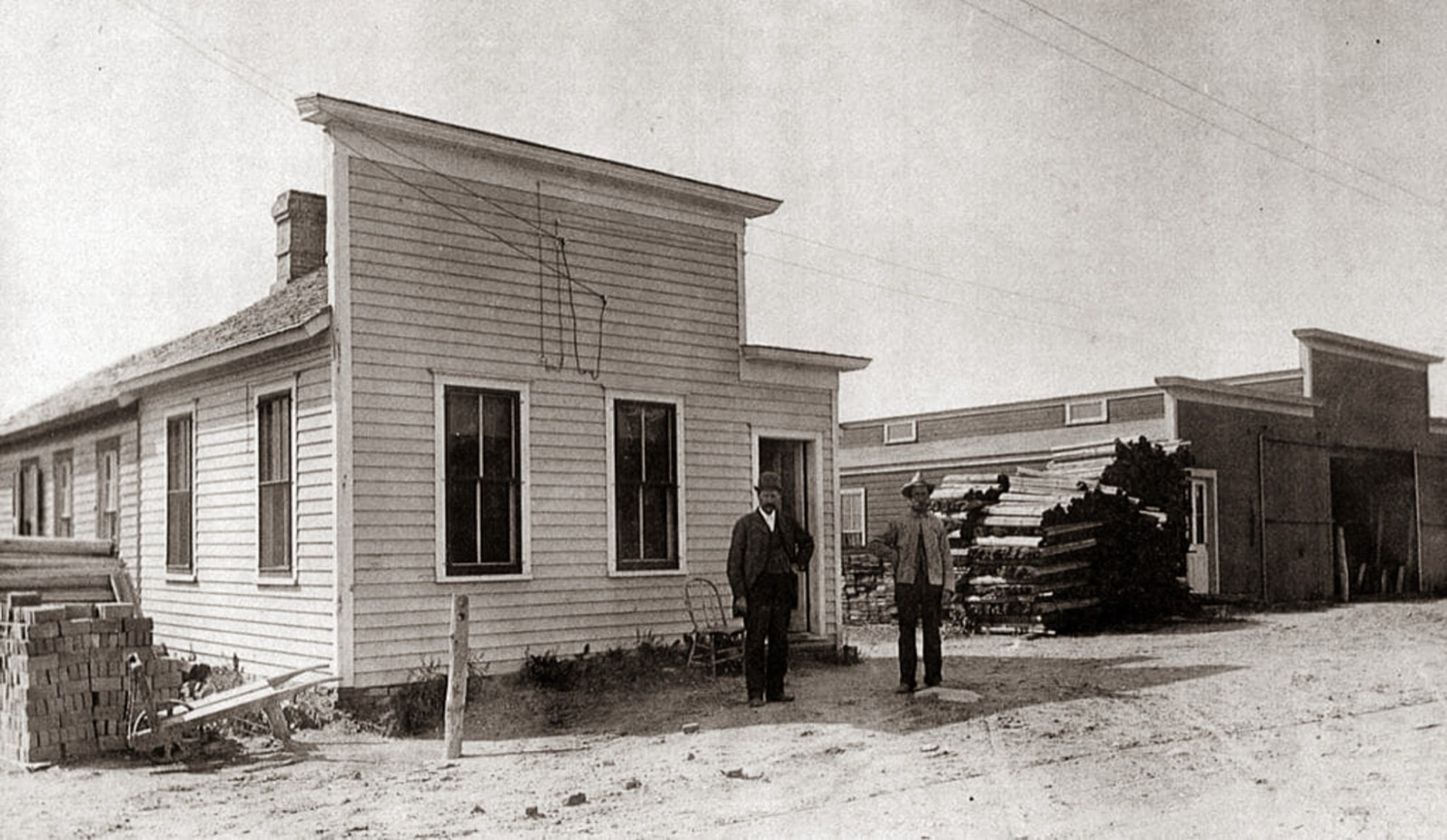
Stenerson Lumber’s own history starts in 1889, when Sven, Gunder and Knute bought forty acres of woods near Pelican Rapids. Cutting wood for heat and cooking, they found trees big enough to saw into lumber, and started selling it to their neighbors.

Credit
Stenerson Lumber’s photograph.The memorial dates the business, Stenerson Bros., to the spring of 1890, with the yard at Pelican Rapids.
Credit
Stenerson Lumber’s photograph.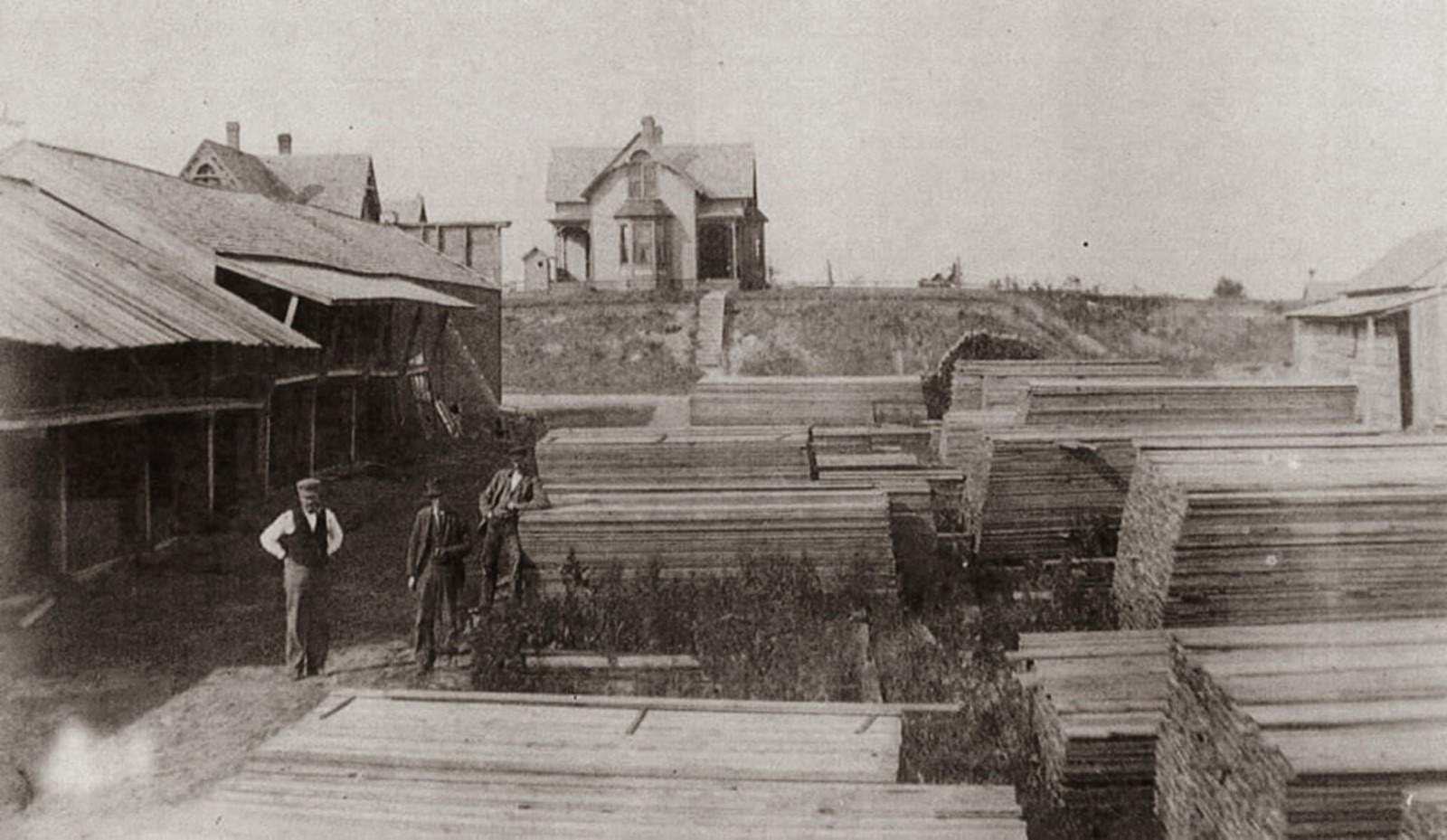
Credit
Stenerson Lumber’s photograph.The yards followed the railroads into new towns. The memorial lists eight in Minnesota: Felton, Borup, Averill, Halstad, Erhard, Pelican Rapids, Erskine and Mentor. The company’s own list adds more, in North Dakota as well, Columbus among them.
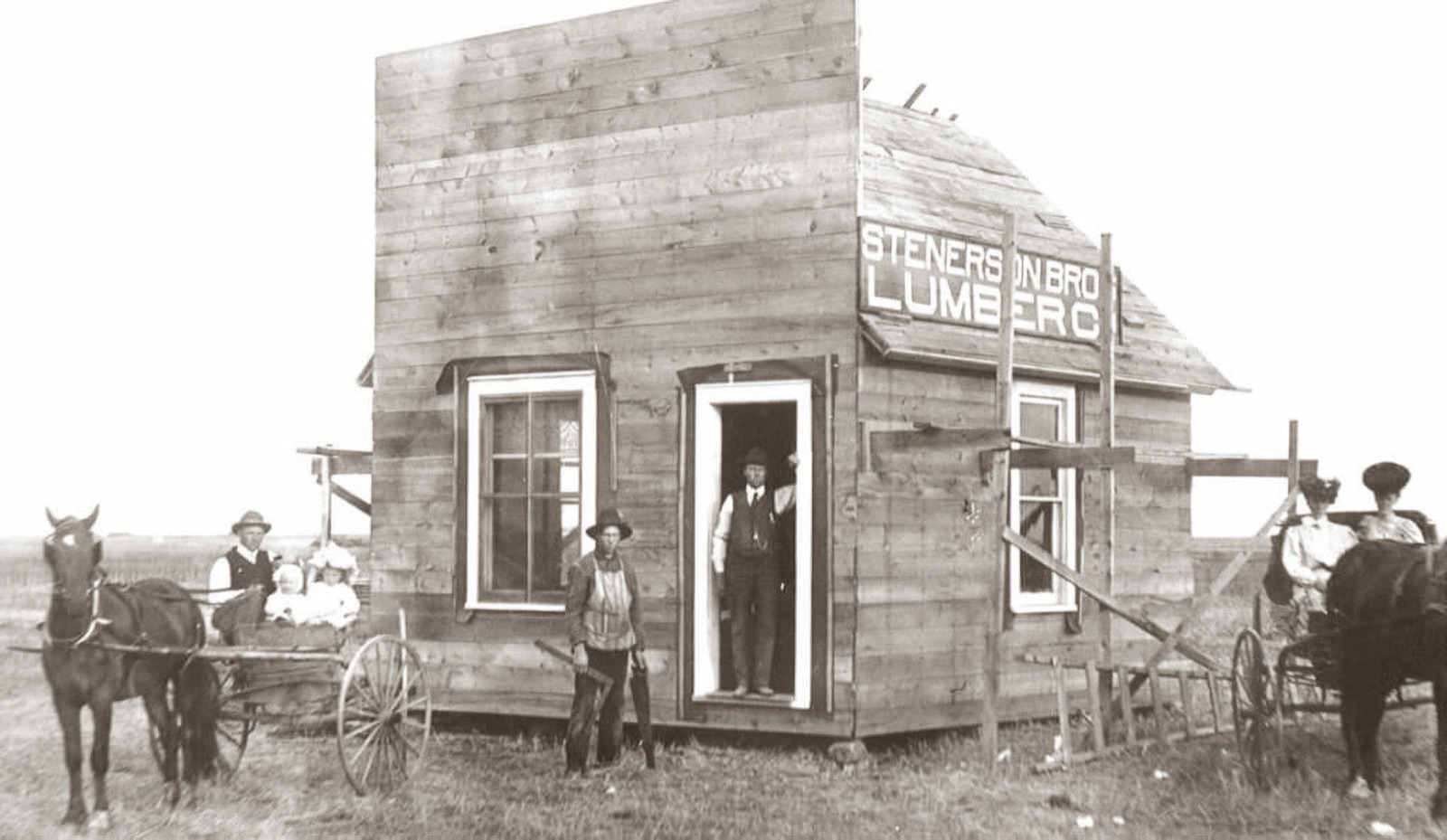
Credit
Stenerson Lumber’s photograph.In 1909 the firm was incorporated as Stenerson Bros. Lumber Co., with its headquarters in Moorhead, selling hardware and farm machinery as well as lumber. Knute was its vice president.
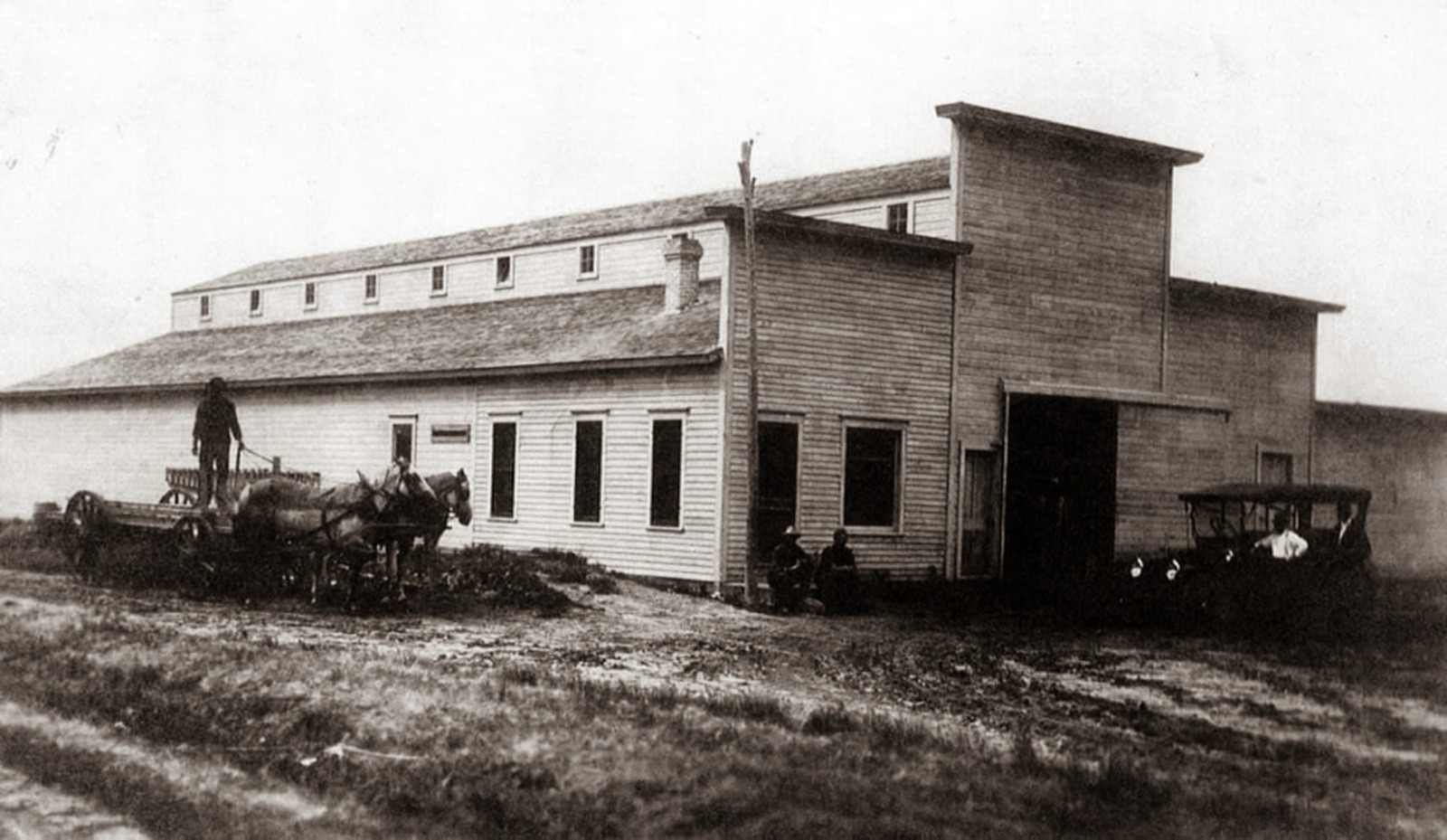
Credit
Stenerson Lumber’s photograph.Stenerson Lumber still has yards in Moorhead, Fergus Falls and Detroit Lakes.
Knute was a banker too. The memorial names four banks he served as president or vice president: Erhard State Bank, First National Bank of Pelican Rapids, Averill State Bank and Pinewood State Bank. Three of them were in towns with Stenerson yards.
Lina and Karen
On June 13, 1893, Knute married Lina J. Sten. That’s how his marriage record spells it; the memorial has Lina J. Steen, from Ringsaker in Norway.
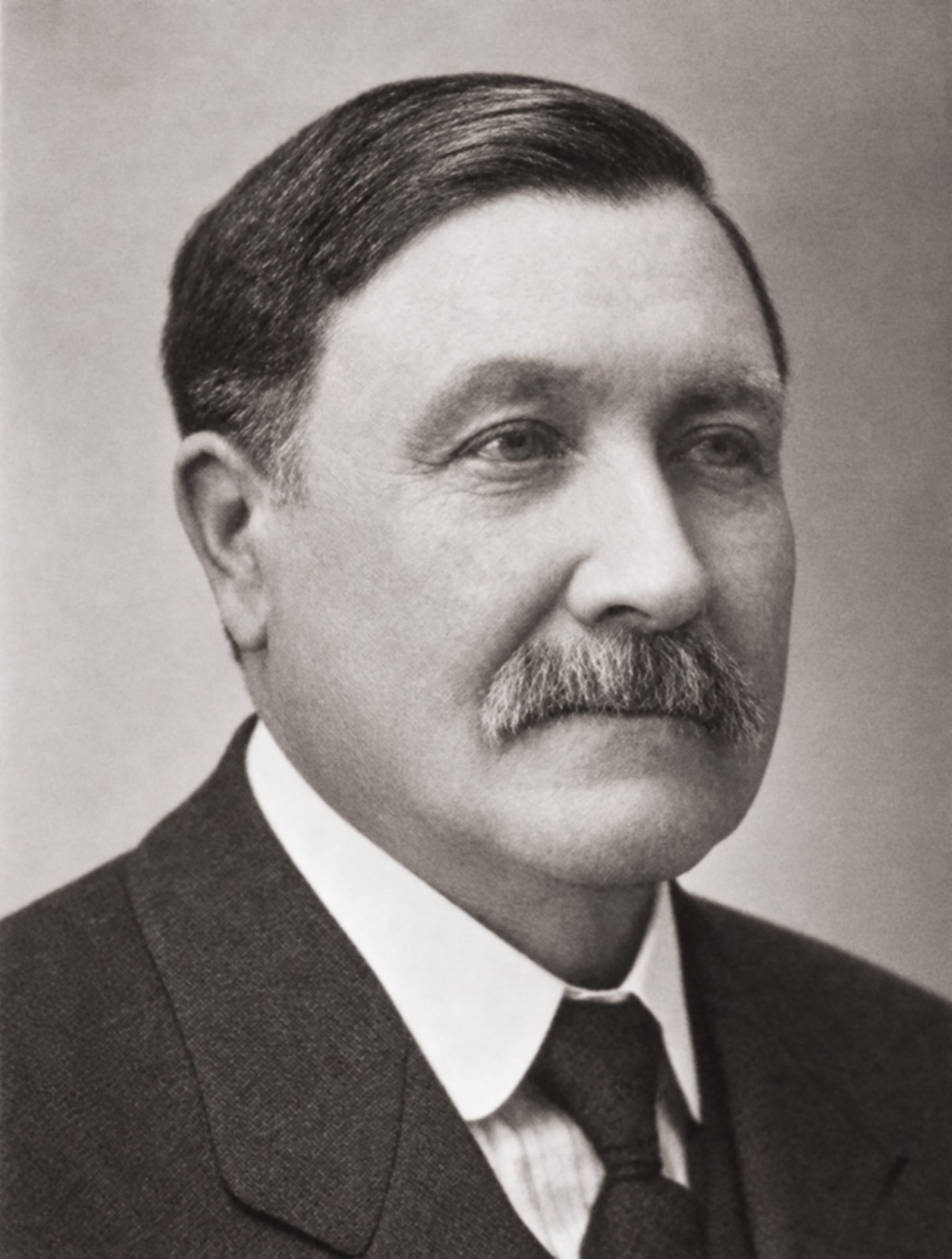

Credit
From the Aarbok for Numedalslaget, 1926 (Numedalslaget i Amerika; printed by Posten Press, Decorah, Iowa).Their daughter, Karen Amalia, was born on June 14, 1891, two years before the wedding. Her baptism names Peder and Gina Ousdahl as her parents. The 1900 census lists her in Knute and Lina’s household as their adopted daughter. She later married Carl Clauson.
Knute and Lina went back to Norway in 1905 and visited the old home, the memorial says. He died on April 19, 1925, and is buried in Pelican Rapids. The memorial names Lina and Karen. His obituary doesn’t mention Bergit.
Bergit
When Bergit was born Knud was a bachelor and Ragnild was unmarried. She married Ole Gjermundsen in Veggli in 1894, and the church recorded it as her first marriage. The tree lists six children of hers, born from 1894 to 1908.
Bergit grew up in Rollag; the tree places her there in 1891 and 1900. By 1906 she was in North Dakota, and on May 17 of that year, in Grand Forks, she married Tollef Kjemhus, from the Kjemhus farm in Veggli. Clara was born the next January. Bergit and Tollef farmed in Fremont Township, Cavalier County. She died on April 10, 1962, and is buried at Lebanon Cemetery in Langdon.
What the records don’t say
- Why Bergit isn’t in Knute’s obituary.
- How Karen came to Knute and Lina, or when.
- Who Gunder was. The memorial and the company call him Knute’s brother, but the tree has no Gunder among Ingemund’s children.
The records establish who belongs to whom. They don’t explain it.
How we know
- Bergit’s baptism, Veggli, Rollag parish, 1887, in the church book (Veggli ministerialbok II 1, p. 24 ↗, Digitalarkivet), and a second church register. Link to come.
- Knute and Lina’s marriage record, June 13, 1893, First English Lutheran, Fergus Falls, entry 3 (Ancestry ↗, account needed).
- Karen Amalia’s baptism, 1891, Hamar Lutheran Church, Rothsay, pp. 6–7, no. 17 (Ancestry ↗, account needed).
- The 1900 United States census, Knute and Lina’s household, Pelican Rapids, with Karen as their adopted daughter Mollie (Ancestry ↗, account needed).
- Ragnild and Ole Gjermundsen’s marriage, Veggli, 1894 (Veggli ministerialbok II 1, p. 80 ↗, Digitalarkivet).
- The memorial, “To av Numedalslagets støtter borte” (“Two of Numedalslaget’s pillars gone”), in the Numedal society’s yearbook for 1926, as translated in Carl’s research notes. The original is at the National Library of Norway (first page ↗, continued ↗).
- Stenerson Lumber’s history on the company’s website, with its photographs of the early yards and of the three brothers.
- The family tree, for dates and places of birth, marriage and death.
- The 1868 portrait, a printed page with a Norwegian caption, probably from the Rollag bygdebokbygdebok (plural bygdebøker) A Norwegian local history, usually a few volumes per district, going farm by farm through who lived there and when. Compiled from church registers, censuses, probate, tax and court records. The Kjemhus line comes from the ones for Flesberg and Rollag. All the words, the parish’s farm-and-family history.