Given in English, with the names in their usual modern spelling. Words in [square brackets] are ours. It’s a working translation, not a certified one.
The letter
I, Hellik Kittilson, make known to everyone by this my open letter that I have sold to Hølje Sevatson a third share in a deserted farm called Ledhoffde, situated in Flesberg parish in NumedalNumedal A long valley in southern Norway, running north-west from Kongsberg, where Flesberg, Rollag and Veggli lie. Numedal and its farms →. Because it is his heirs’ rightful odal [land a family holds by inheritance], I have therefore sold the third share in the aforementioned Western Lidhoffde, away from myself and my heirs and to him and his heirs, to own forever, free and warranted against the claims of anyone, within the farm and outside it, together with all the associated grounds which belong and have belonged to it from ancient times until the present, within its rightful boundary markers.
Likewise, I have received three dalerdaler The silver money Norway counted in before the krone of 1875: the riksdaler, and from 1816 the speciedaler. In the 1830s a farm in Veggli sold for a few hundred speciedaler. All the words for the third share in the aforementioned deserted farm, and with that this matter was settled and fully paid, to my full satisfaction. For further testimony and better security, I ask the honorable man Ulf Levordson to seal this my open letter together with me. It was written at Klevjorden in Flesberg parish in Numedal on the twenty-third day of October, 1580.
What it says, and what it doesn’t
- The buyer is Hølje Sevatson, generation 2 of the Kjemhus line. The seller is Hellik Kittilson.
- A third share, not the whole farm, for three daler, “lochit och velbetallit”: settled and fully paid.
- “Øde gaard,” a deserted farm, is the letter’s own description. It doesn’t say how long the farm had been empty, why, or what was still standing.
- “His heirs’ rightful odal” says Hølje’s heirs already had an inherited claim to the land. It doesn’t say where the claim came from. The letter names neither Hølje’s wife nor his parents.
- “Vede steder,” the grounds that went with the farm, probably means veidesteder: places for hunting, trapping and fishing. The letter doesn’t say which.
- Who wrote it isn’t stated. It was written at Klevjorden, and Sigurd Vinger suggests Knut Sevatson, who owned a share of Klevjorden, may have been the writer.
- The seals: two seals were pressed into the paper on the fold. Sigurd reads them as Hellik’s on the left and Ulf’s on the right.
- Below the fold the same hand began the letter twice more and stopped after a line. Those are unfinished starts, not two more sales.
Where the original is
The transcription describes the original as a small folio sheet of paper. When Sigurd Vinger’s Flesberg-boka came out in 1990, it was at Øvre Lehøvd. The farm’s owners kept their old papers in their safe. The farm has since changed hands, and Flesberg Historielag has looked for the letter without finding it. Its whereabouts today are unknown.
A faint note at the top of the transcription reads, by Sigurd’s account, that M. Johnson made it in April 1921 and someone revised it in June 1924. He thinks both worked at the National Archives in Oslo, which may keep a copy. Flesberg-boka put copies in the bygdebokbygdebok (plural bygdebøker) A Norwegian local history, usually a few volumes per district, going farm by farm through who lived there and when. Compiled from church registers, censuses, probate, tax and court records. The Kjemhus line comes from the ones for Flesberg and Rollag. All the words archive and at the Norwegian Historical Source Institute in Oslo. None of these has been checked yet.
Hølje’s grandson’s 1676 testimony, that his grandfather was born at Lande, is on the Lande page.
The copy and the transcription
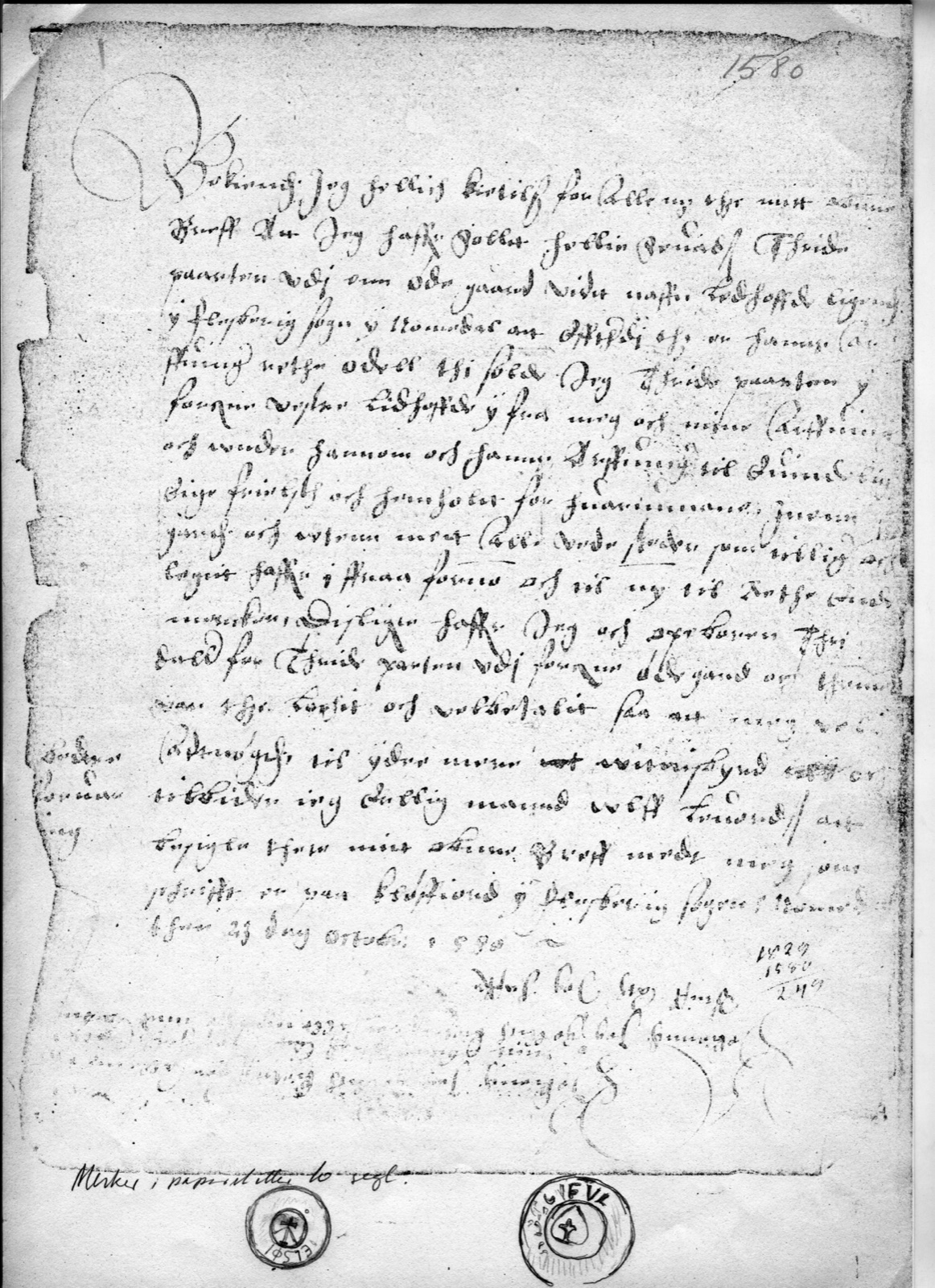
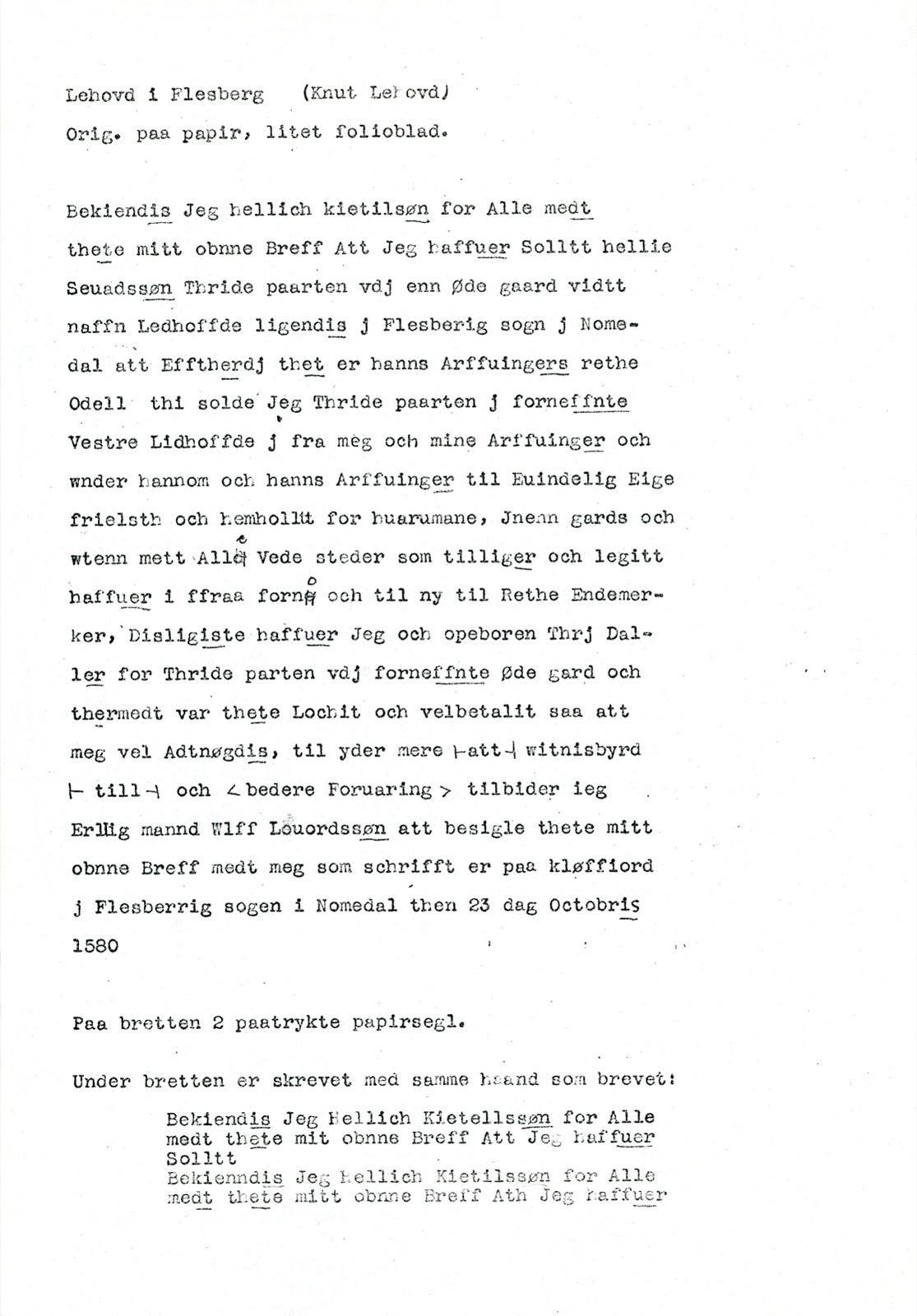
Copy and transcription supplied by Sigurd Vinger, author of Flesberg-boka: bustad og ætt, on behalf of Flesberg Historielag, October 24, 2026. The English translation was made for this site from the transcription and checked against the copy. Thank you, Sigurd.